
Radiation therapy is a fundamental pillar of modern oncology, delivering targeted treatment to eliminate cancer cells and shrink tumours. However, the therapeutic power of ionising radiation requires stringent safety measures. Advanced medical technology and refined clinical protocols ensure that radiation exposure is precisely controlled, maximising therapeutic efficacy while protecting both patients and medical professionals.
At Apulki Medical Center, radiation safety is integrated into every step of diagnostic imaging and oncology care through cutting-edge technology, strict regulatory adherence, and the foundational ALARA (As Low As Reasonably Achievable) framework.
The Fundamental Principle: The ALARA Framework
Radiation safety in clinical environments is governed by the ALARA principle, which mandates that every reasonable effort be made to maintain radiation doses well below regulatory limits. ALARA relies on three core protective strategies:
- Time: Minimising the duration of radiation exposure directly reduces the absorbed dose for patients and clinical staff.
- Distance: Increasing the distance between individuals and the radiation source significantly decreases exposure according to the inverse-square law.
- Shielding: Employing physical barriers—such as lead-lined walls, protective drapes, and specialised personal protective equipment (PPE)—blocks unwanted scatter radiation.
How Modern Machines Protect Patients
Technological advances in radiation equipment have revolutionised cancer care by confining high-energy radiation exclusively to target tissues while sparing surrounding healthy organs.
1. Precision Beam Shaping and Multi-Leaf Collimators (MLC)
Modern linear accelerators (LINACs) utilise internal computerised lead leaves that dynamically move to match the precise 3D shape of a tumour. This high-precision beam shaping prevents stray radiation from hitting neighbouring non-cancerous tissue.
2. Intensity-Modulated Radiation Therapy (IMRT)
IMRT systems allow radiation oncologists to modulate the intensity of individual radiation beams across the treatment area. High therapeutic doses are directed into the core of the tumour, while sensitive adjacent organs receive minimal exposure.
3. Image-Guided Radiation Therapy (IGRT) and Real-Time Tracking
Because internal organs shift when a patient breathes or swallows, modern machines incorporate onboard CT or fluoroscopic imaging. Real-time motion tracking ensures the beam only fires when the target is perfectly aligned, eliminating accidental exposure to healthy surrounding tissue.
4. Automated Dose Optimisation and Low-Dose Imaging
Diagnostic CT scanners and radiotherapy planning systems feature automated exposure controls. These smart sensors adjust the radiation output automatically based on patient size, anatomical density, and body part, ensuring clear imaging at the lowest possible radiation dose.
How Advanced Infrastructure Protects Healthcare Staff
Radiology technologists, medical physicists, and radiation oncologists work in proximity to radiation sources daily. Modern healthcare facilities employ comprehensive engineering controls and individual monitoring systems to ensure occupational safety.
- Vault Construction and Interlock Systems: Treatment rooms housing high-energy radiation machines are encased in thick high-density concrete and lead walls. Automatic safety interlocks instantly shut down the radiation beam if a treatment room door is opened unexpectedly during operation.
- Personal Dosimetry Monitoring: Healthcare workers wear individual optically stimulated luminescence (OSL) or film badge dosimeters. These devices continuously track accumulated occupational radiation doses to ensure staff exposure remains well below legal safety thresholds.
- Specialised Protective Gear: In interventional or diagnostic environments where staff assist during live procedures, team members use lightweight lead aprons, thyroid shields, leaded eyewear, and protective drapes.
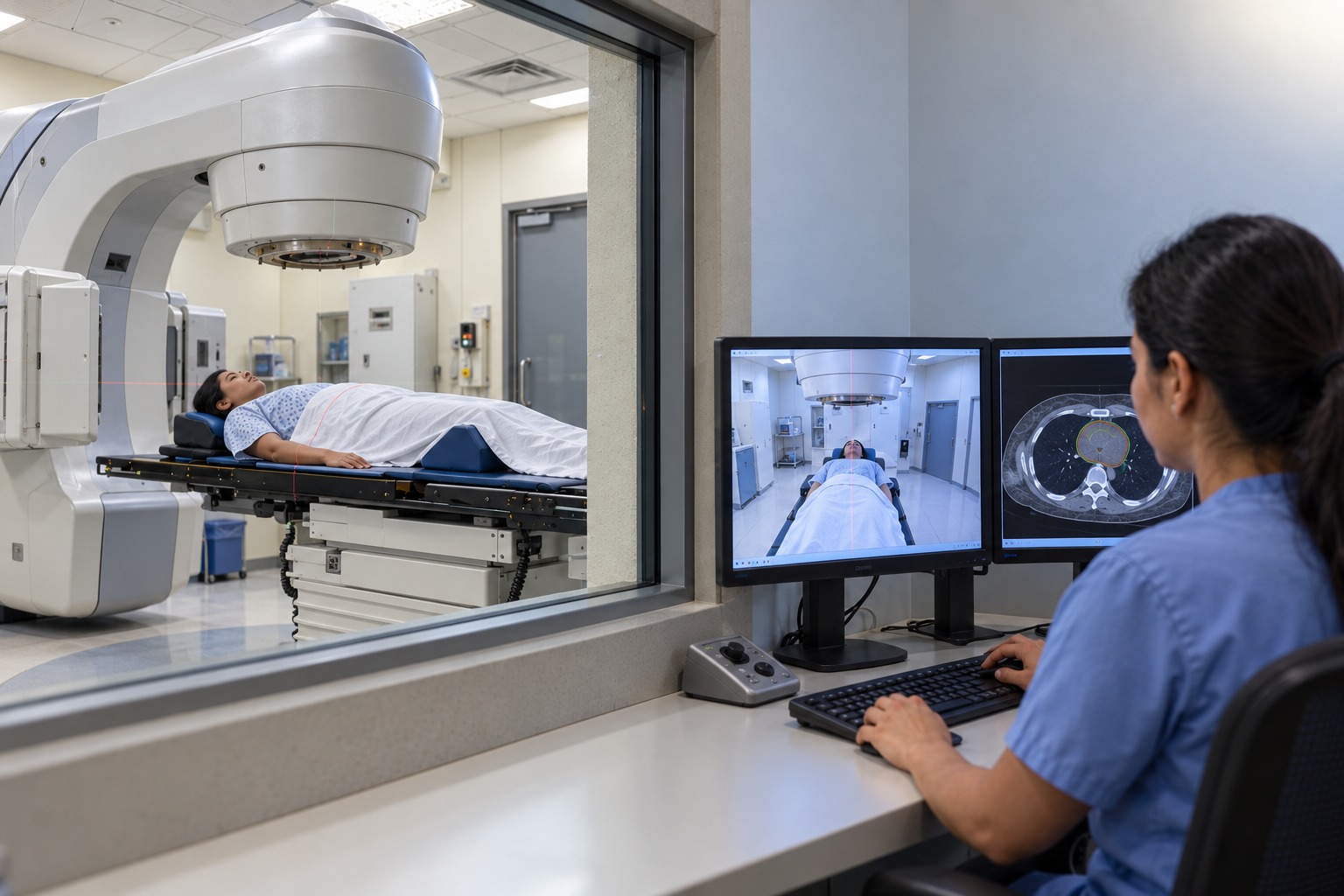
- Remote Control Consoles: Radiologic technologists program and initiate all radiation delivery from shielded control rooms separated by lead-glass viewing windows, preventing direct exposure during active therapy sessions.
Radiation Safety Standards at Apulki Medical Center
At Apulki Medical Center, maintaining patient trust and safety is central to our diagnostic and oncology services. Our team follows rigorous quality assurance standards:
- Regular Calibration and Testing: Medical physicists conduct daily, weekly, and monthly quality audits on diagnostic and therapeutic equipment to confirm precise radiation output.
- Individualised Treatment Planning: Every patient’s treatment plan is simulated, verified, and cross-checked by a multidisciplinary team of radiation oncologists, medical physicists, and dosimetrists prior to beam delivery.
- Comprehensive Patient Guidance: Patients receive clear pre-procedure counselling regarding what to expect during their scans or therapy, eliminating anxiety and encouraging optimal positioning during care.
The Bottom Line
Modern radiation technology has made cancer treatment faster, more precise, and safer than ever before. Through a combination of advanced machine engineering, automated dosage controls, physical shielding, and clinical expertise, Apulki Medical Center delivers effective oncological care while prioritising the long-term health and protection of both patients and healthcare personnel.